preloader

ARNIS

ABOUT BALINTAWAK CANADA **Our Very Own Cebuano Art — Lineage & Origin**

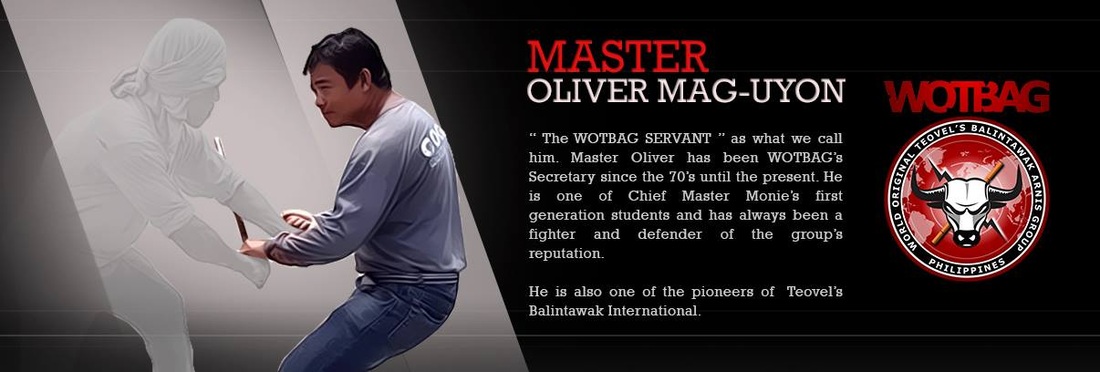
Balintawak Eskrima was founded by Venancio Bacon in Cebu as a Cebuano Filipino Martial Art—a single-stick, close-quarter system built for real combat. The art was later organized into five structured groupings by Teofilo Velez and Jose Villasin, ensuring a clear and systematic method of learning. Through the Velez lineage, I trained under Eddie Velez and Monie Velez in the WOTBAG (World Original Teofilo Velez Balintawak Arnis Group) methodology, further shaped by teachings from Oliver Mag-uyon, Kirt Velez, and Master Chester. At its core, Balintawak emphasizes simplicity, efficiency, and minimalism—focusing on timing, distance, sensitivity, and decisive counter-offense in close-range (corto) encounters. Training is rooted in disciplined one-on-one instruction, developing adaptability and real-world self-preservation. Balintawak Canada carries this direct Cebuano lineage—preserving not only the system, but a living cultural heritage. “Atoa ni — higugmaon nato kini.” This is ours. Let us love it, protect it, and pass it on.

The Teovel’s (WOTBAG) Legacy. Born in Cebu. Preserved in Canada. Shared with the World.

Balintawak Canada exists to preserve, teach, and share the living art of Balintawak Eskrima — a Cebu-born Filipino Martial Art shaped by history, survival, rhythm, intelligence, humility, and the fighting spirit of a people who endured invasion, colonization, oppression, poverty, and hardship without losing their dignity, creativity, faith, and joy. Balintawak is not merely stick fighting. It is a combat philosophy born from the primordial spirit of Cebuano culture — direct, practical, playful, adaptive, and deeply human. It teaches the student how to strike, defend, read, adjust, recover, and flow. But more than that, it teaches timing, patience, courage, sensitivity, respect, and self-mastery. Balintawak Canada is a community dedicated to the preservation, transmission, and responsible teaching of Balintawak Eskrima as a living Filipino Martial Art. We are open to being nourished by the wider richness of Filipino Martial Arts, because Balintawak belongs to the larger Filipino fighting heritage. At the same time, we remain faithful stewards of our own lineage, method, discipline, and responsibility. Born in diaspora, I was born of Cebuano and Waray-waray parents. Deep in my consciousness, we honour the Cebuano roots of Balintawak. We recognize that this art did not arise from comfort. It was shaped by struggle, sharpened by necessity, and refined through generations of practitioners who valued practicality, timing, courage, adaptability, and survival. Balintawak is elegant but not ornamental. It is playful but not careless. It is simple but not shallow. It is direct but not crude. It is a combat art with culture, rhythm, discipline, and soul. Our mission is to teach Balintawak in a way that respects its origins, preserves its living method, and makes it accessible to students in Canada and around the world.

Training the Eyes, Reading Intent, and Living Cuentada

Combat Philosophy Rooted in Teovel’s Martial Art's Balintawak Wisdom "Higugmaa gyud ni kay Atoa ni!"

Balintawak Canada is rooted in a combat philosophy shaped by Teovel’s unique martial wisdom — a wisdom that begins with the training of the eyes. The eyes are the window of the artist’s spirit. They are the primary source of intellectual speed, the reader of intent, the decoder of telegraphing, and the ultimate sensor of **cuentada**. Before the body moves, the eyes must already be awake. Before the hand reacts, the mind must already be reading. In Balintawak, the student learns to remain square, focused on the crosshair, yet wide enough to read the four quadrants. The trained eyes guard vigilantly against blind spots, false openings, reckless entries, sudden rhythm changes, and hidden intentions. This visual discipline is not merely about looking; it is about seeing with understanding. This is reinforced by the rhythmic principles of **undayag** and **duyan-duyan**. Through the drill principle of **“Simhota ko Dong,”** the practitioner learns to invite, sense, draw, and read the opponent’s intent while quietly disturbing balance, timing, and structure. The movement may look simple from the outside, but within it is a deep study of pressure, timing, rhythm, and deception. In the **palakaw** method of teaching — or what we may call **palakaw-mology** — the **agak** teacher guides the student slowly and carefully. Every movement is studied in detail. Every correction carries meaning. Every repetition becomes a lesson. The teacher reminds the student: **“Sabta gyud.”** Understand it deeply. **“Ayaw pag-una kay maulahi ka.”** Do not go ahead too early, or you may fall behind. **“Mas maayo pa nga maulahi ka, kay makaapas ka pa.”** It is better to be a little late, because you can still catch up. In a bladed-weapon art, reckless anticipation can carry serious consequences. Timing must be earned. Reaction must be trained. Cuentada must be understood. The student must learn that speed without reading becomes panic, and anticipation without understanding becomes danger. Teovel’s instruction on power is direct, practical, and profound: **“Ayas i-duso, ilabhog, ilabtik, tagaki, dakdaki ug bondaki.”** Do not merely push. Pull and swing. Snap it. Drop it like a hammer. Strike with wrist, arm, body, weight, and intent. These are not only commands. They are lessons on how power is built — through alignment, relaxation, timing, weight transfer, wrist action, body mechanics, and whole-body connection. True power is not forced. It is organized. It is released. The student is also reminded: **“Lantawa. Ayaw panggahi. Relax.”** Look. Do not stiffen. Relax. Breathe. Do not panic. Do not become hard and brittle under pressure. Pain, resistance, and pressure are part of training, just as they are part of life. The artist must learn to stay calm, recover, adapt, and continue. To win in Balintawak is not only to be fast or strong. It is to read better, time better, adjust better, and understand deeper. This is the essence of **cuentada**. **Cuentadaha.** Let calculation, timing, and understanding guide the movement. There is always something hidden inside the motion: **“Kada tira, naay piktos.”** Every hit carries a flick, a punctuation, a finishing touch. **“Inig gunit, tuisa o ubani ug lubag.”** When handling, do not merely hold; guide the movement with a twist. Ruin the structure with **ibot** or **tikwang**. Distract the focus with a strong **pakgang**. Pull with **bira**, follow with **kabra**. Draw it in like a claw hammer. Use **dagit-dagiti lang** — swoop in like a swallow, quick and precise, with downward whip and intention. These are not isolated tricks. They are expressions of a deeper principle: every action must carry meaning. Every contact must create a consequence. Every movement must either read, disturb, redirect, uproot, or finish. Let **cuentada** guide the fight. This Teovel legacy wisdom is indispensable. It is not preserved only in technique. It is ingrained in the way we see, move, teach, breathe, recover, and live the art. Balintawak Canada carries this wisdom not merely as a fighting system, but as a living discipline — a way of training the eyes, calming the spirit, sharpening the mind, refining the body, and deepening the understanding of movement, timing, humility, and life itself.

"Kung wala kay kartiyo, mura kag panday nga guba ug balay." Author - My Mom in heaven.

The Bisdak Culture at play "Sabta Gyud", "Cuentada", and "Kartiyo" The Three Pillars of Mastery

In Cebuano, “Sabta” means more than simply knowing something intellectually. It can mean understanding through common sense, lived experience, instinct, judgment, and practical wisdom. To say “Nakasabot ka” is not only to say, “You heard the lesson.” It means, “You have grasped the meaning. You understand what is happening, why it is happening, and what must be done.” This is where cuentada enters. Cuentada is the art of calculated understanding in motion. It can be learned through experience, survival, shrewd attacking, countering, counter-for-counter, reading telegraphing, sensing intent, and recognizing patterns before they fully appear. On the defensive side, cuentada helps the artist survive. On the winning side, cuentada allows the artist to be several moves ahead of the opponent. It is not merely reaction. It is not merely speed. It is not merely accumulated technique. Cuentada is the ability to read the unfolding situation and shape the next moment before the opponent fully owns it. But even cuentada needs proof. This is where kartiyo becomes indispensable. Kartiyo is the gauge, the valid sign, the evidence, the practical proof that substantiates the claim of sabta. It is the visible confirmation that the student has truly understood. Without kartiyo, a practitioner may become only a collector of techniques — impressive in presentation, strong in explanation, perhaps even convincing in preaching — but lacking the living proof of mastery. Kartiyo reigns in the realm of concepts. It shows whether the artist can apply the idea, not merely repeat the movement. It reveals whether the student can read pressure, manage timing, control structure, create openings, recover from danger, and make the correct adjustment under stress. In Balintawak, mastery requires all three: Sabta gyud — understand it deeply. Cuentada — calculate, read, and stay ahead. Kartiyo — prove the understanding through concept, timing, and application. Together, these form a deeper measure of the artist. A student may memorize many techniques, but without sabta, the techniques remain shallow. A fighter may move fast, but without cuentada, speed becomes reckless. A teacher may speak well, but without kartiyo, the teaching lacks proof. True mastery in our art requires understanding, calculation, and evidence. The artist must not only know the movement. He must understand the reason, read the moment, and prove the concept in action. That is why Teovel wisdom reminds us: Sabta gyud. Understand deeply. Cuentadaha. Let calculation guide the fight. Pangitaa ang kartiyo. Look for the proof. Because in Balintawak, wisdom is not only spoken. It must be seen, felt, tested, and proven.

With our Filipino Hospitality, we invite you to join us Dayon kamo! Pugay po!

We invite like-minded and passionate martial artists, beginners, cultural learners, and seekers of growth to train, learn, and enjoy the living art of Balintawak. Take your first step with us on a journey of a thousand miles. Through movement, rhythm, discipline, and friendship, Balintawak offers more than martial training. It offers health, confidence, humility, and the delight of learning. Train with individuals from different walks of life who share the same passion for growth, respect, and discovery. Be healthy, be challenged, be renewed, and trust that life is generous enough to lead you toward a deeper realization of yourself. Come train with us. Learn Balintawak. Enjoy the journey.

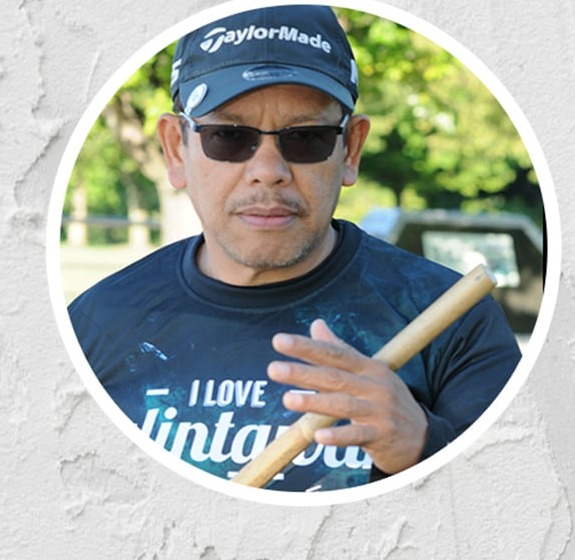
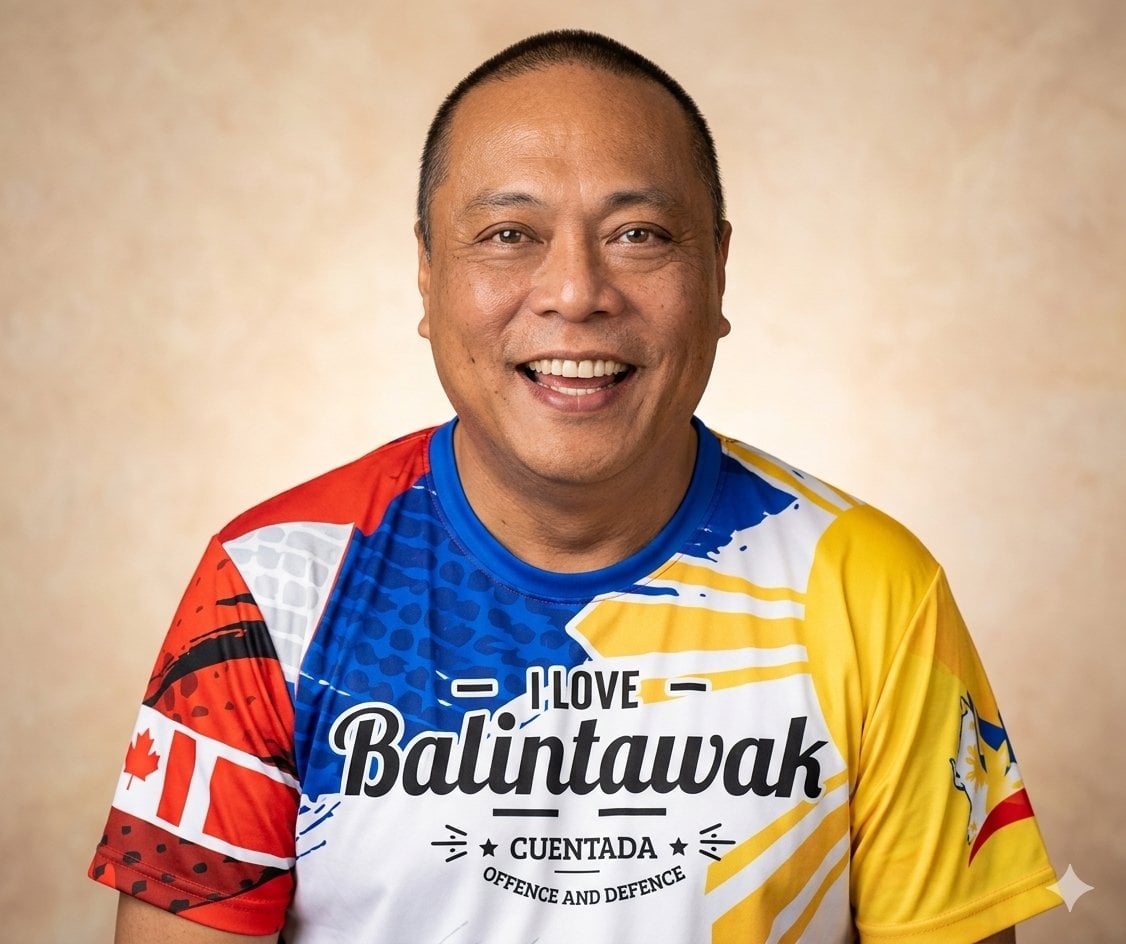
OUR BALINTAWAK TRAINORS

Special Lessons, as tailored to each student, will have to be TBA.

OUR TRAINING SCHEDULE

Beginning 2026, our schedule has changed. Weekdays training schedules have been moved to Sunday morning from 9am to 12pm only. Special Trainings can be arranged. Call 416.908.5453 | Email: pugaypo@balintawakcanada.ca

01

FREE CONSULTATION

We offer lessons in Arnis, Knife, Empty Hands and Aikido. Talk to us how best we can help you.

02

EXCELLENT SERVICE

Our joint extensive years of different Martial Arts training and teaching.

03

BEST TRAINERS

Our goal is to teach practical, minimal, and effective martial arts.

04

TRAINING SCHEDULE

To cater your needs, we have regular Balintawak and Aikido schedules. Special program will be TBA.

TESTIMONIALS

Balintawak Canada

Best Wishes! HAPPY NEW YEAR! Stay healthy and positive!

In Canada, we have 4 Seasons and our lives can be organized in each cycle. Each Quarter, we hope to accomplish each goal.